The relationship between nature and interior design has become increasingly important in recent years. From indoor greenery to natural materials, many homeowners are looking for ways to create calmer and more restorative environments.
Yet bringing nature indoors does not always require dramatic interventions.
Often, the most successful nature-inspired interiors are the ones where natural elements feel integrated rather than decorative.
Start With Natural Light
Before introducing plants or natural materials, it is worth considering the role of daylight.
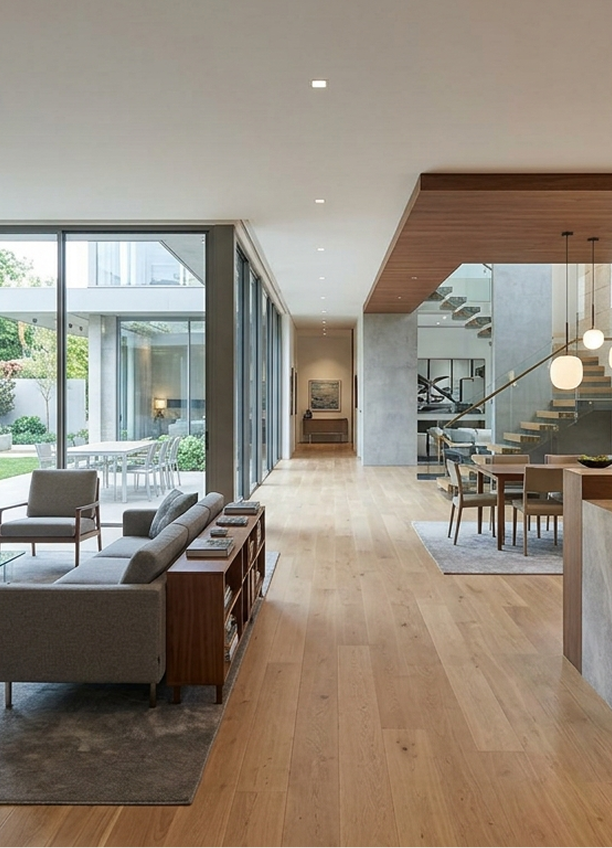
Natural light changes how spaces are perceived throughout the day. It softens interiors, highlights material textures, and creates a stronger connection to the outside environment.
Homes that prioritise daylight often feel calmer and more balanced without requiring significant design additions.
Use Natural Materials Thoughtfully
Materials provide one of the most effective ways to introduce a sense of nature indoors.
Timber, stone, lime-wash finishes, cane, jute, and handcrafted surfaces bring texture and warmth while maintaining visual simplicity.
Rather than treating these materials as accents, incorporating them into the architectural language of a space creates a stronger and more authentic connection to nature.
Greenery Works Best With Restraint
Indoor plants can enhance an interior significantly, but quantity alone does not create impact.
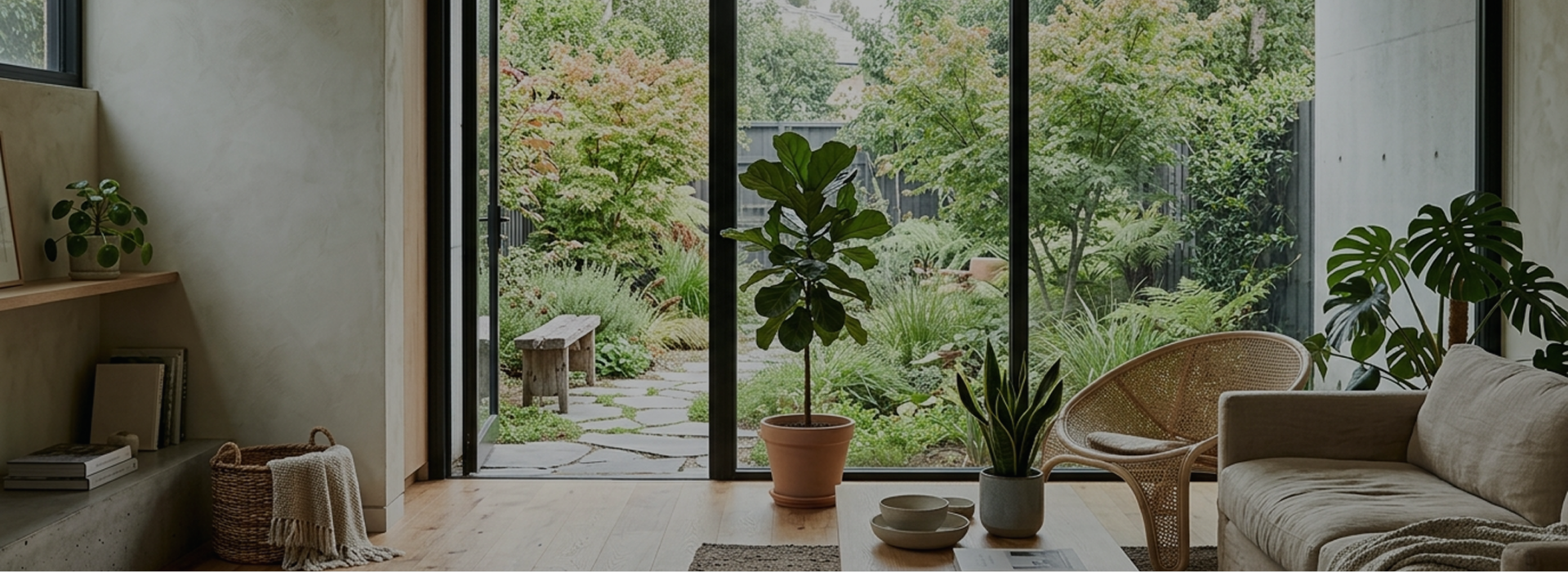
A few carefully positioned plants often contribute more to the atmosphere of a space than an overcrowded collection. Greenery should feel integrated into the overall design rather than added as an afterthought.
The objective is to create balance rather than visual density.
Create Connections to Outdoor Spaces
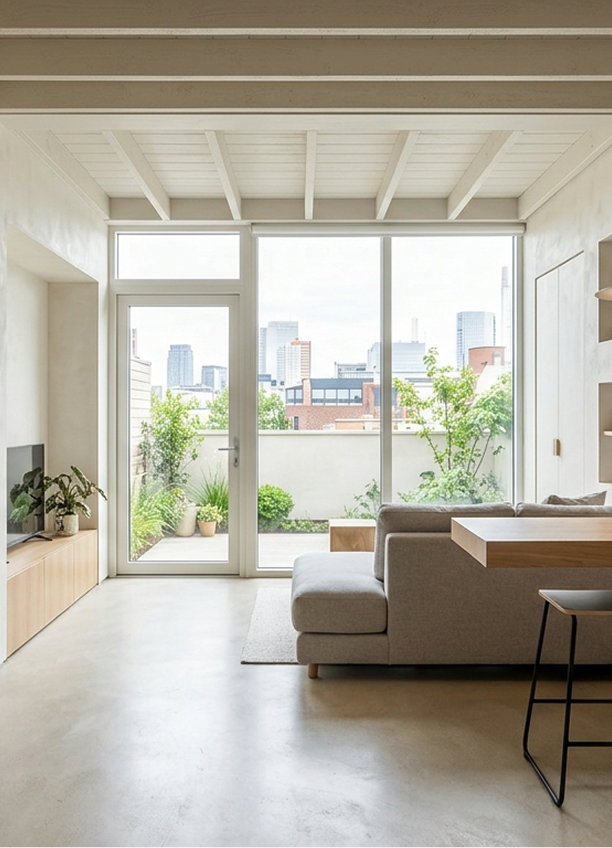
Balconies, courtyards, terraces, and garden views offer valuable opportunities to extend the experience of the home beyond its interior boundaries.
Even compact outdoor spaces can become meaningful extensions of daily life when designed with care.
Maintaining visual continuity between indoor and outdoor environments strengthens this connection and enhances the overall spatial experience.
Focus on Atmosphere Rather Than Theme
Nature-inspired design is often most successful when it avoids becoming overly literal.
Instead of relying on themed decor or excessive botanical references, many contemporary interiors focus on qualities commonly associated with natural environments: calmness, softness, openness, and material honesty.
This approach creates spaces that feel timeless rather than trend-driven.
Conclusion
Biophilic design is not simply about adding plants to a room. It is about creating a stronger relationship between people, space, and the natural environment.
When approached with restraint and intention, natural elements can transform how a home feels, creating interiors that support calm, comfort, and a deeper connection to everyday living.